Every Mid-Autumn Festival (the 15th day of the eighth lunar month)—a time where traditionally families celebrate reunions—two locations in Hong Kong come alive blaze with bright flames and thick smoke. More intriguingly, a vibrant, lively dragon weaves its way through the crowds. This activity, known as the Mid-Autumn Fire Dragon Dance, boasts a history spanning over a century and is celebrated in Tai Hang and Pok Fu Lam on Hong Kong Island. In 2017, the Mid-Autumn Fire Dragon Dance was among the inaugural entries on the “Representative List of the Intangible Cultural Heritage of Hong Kong”.
For many Chinese, dragons remain enigmatic and mythical because they only exist in ancient books, myths and legends; we have never seen them in real life. In traditional Chinese culture, dragons are revered as symbols of good fortune and auspiciousness. Over a century ago, residents in Hong Kong initiated the Fire Dragon Dance to ward off a plague. Today, while the plague has become a thing of the past, some villagers in Hong Kong continue to practice this tradition year after year. What compels them to preserve this century-old practice? In this feature, we delve into the Fire Dragon Dance in Pok Fu Lam, exploring its rich history and cultural significance. Through conversations with Alun Siu, Director of the Pok Fu Lam Village Fire Dragon Association, and his partner Edmond Lee, who have played pivotal roles in expanding and popularising the event in recent years, we gain an insight into the event’s evolution, its history and profound meaning to the community, as well as what it means to Siu and Edmond. As the saying goes, “Starting a business is difficult, but sustaining it is even harder,” let alone preserving a century-old tradition. Let’s take a journey to Pok Fu Lam and see how the rich legacy of Fire Dragon Dance has been preserved.

Passing down through generations
Fire Dragon Dance originated in Hong Kong in the late 19th century, when a plague struck the city. Believing that incense could ward off disease and that dragon symbolised good fortune, some citizens crafted fire dragons to ward off the plague. In Pok Fu Lam Village, located on the south side of Hong Kong Island, villagers built dragons from straw and adorned them with lit incense sticks, parading these fire dragons through the village in pursuit of safety and peace. After the dance, the plague subsided. Ever since then, the villagers of Pok Fu Lam Village have performed the Fire Dragon Dance for two days around the Mid-Autumn Festival every year. Today, the Fire Dragon Dance has evolved beyond merely seeking good health and peace; it has become a festival that unites villagers and a cultural event to celebrate traditional customs with the people of Hong Kong.
“Today, the Fire Dragon Dance has evolved beyond merely seeking good health and peace; it has become a festival that unites villagers and a cultural event to celebrate traditional customs with the people of Hong Kong.”
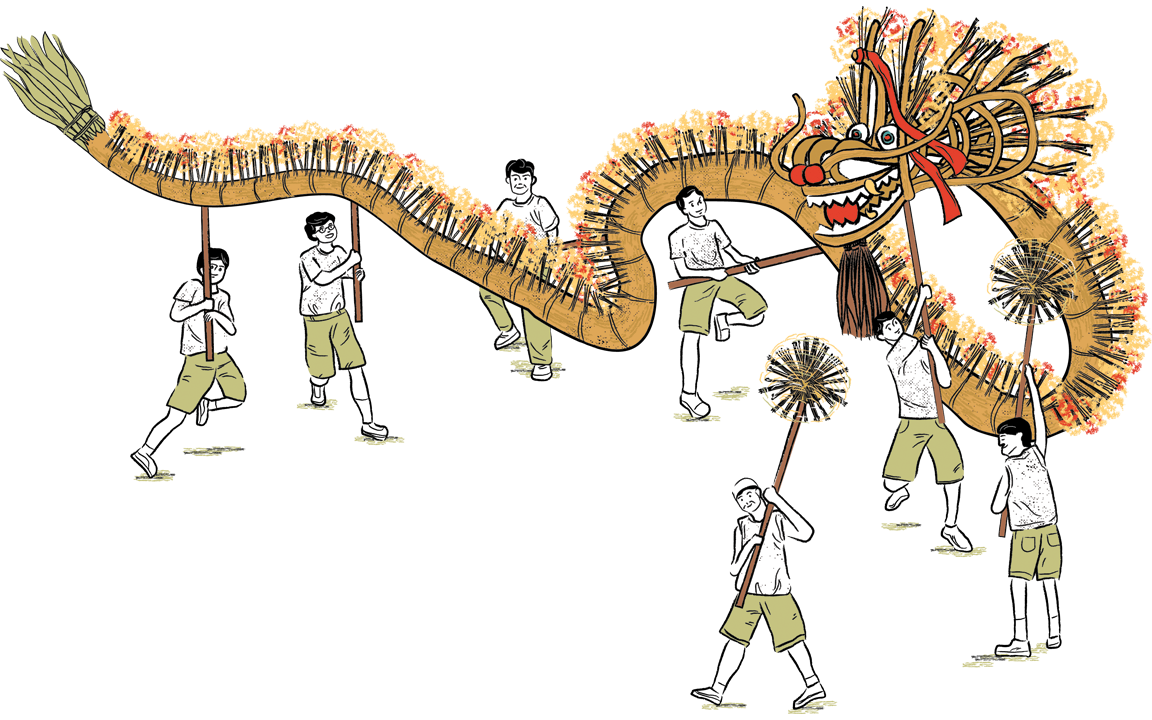
Every year, the Fire Dragon Dance at Pok Fu Lam Village begins on the eve of the Mid-Autumn Festival (the 14th day of the eighth lunar month). A smaller fire dragon, about ten meters long, is paraded through the village, mainly by the younger members of the village. The main event, held on the 15th, features a fire dragon approximately thirty meters long, is paraded through the Pok Fu Lam community by experienced members of the Fire Dragon Association and volunteers.
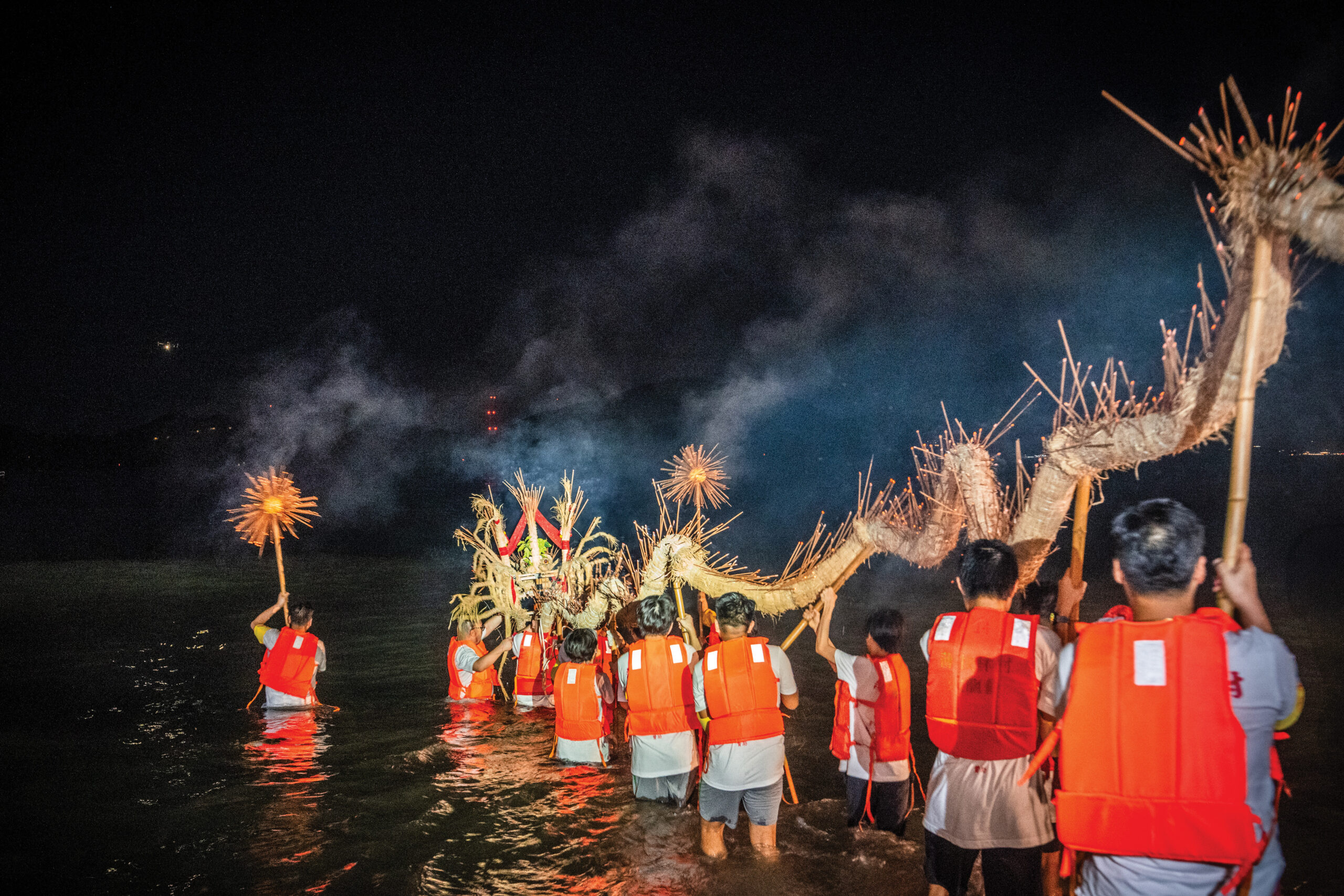
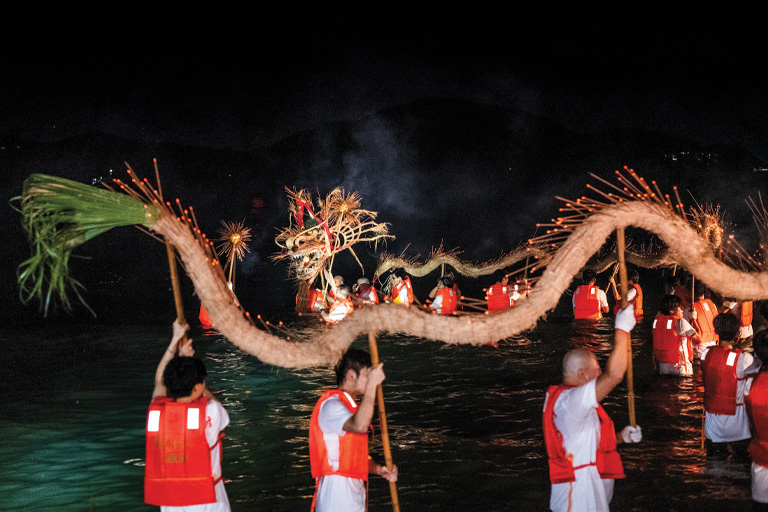
The main event held on the 15th spans over six hours featuring the "Dragon Returns to the Sea" ritual at Waterfall Bay around midnight. The entire fire dragon is immersed in the sea, signifying the delivery of blessings and the dispelling of negative energies. Following the ritual, villagers retrieve the dragon from the sea and bring it ashore, concluding the whole event.
6:30 PM
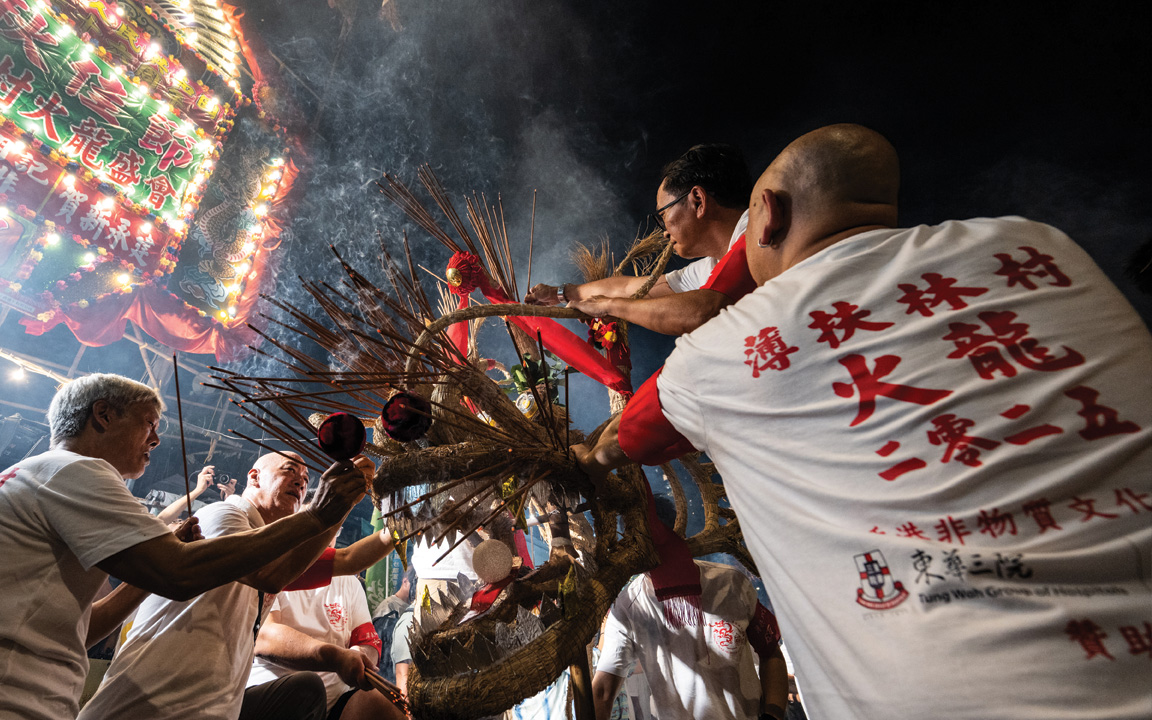
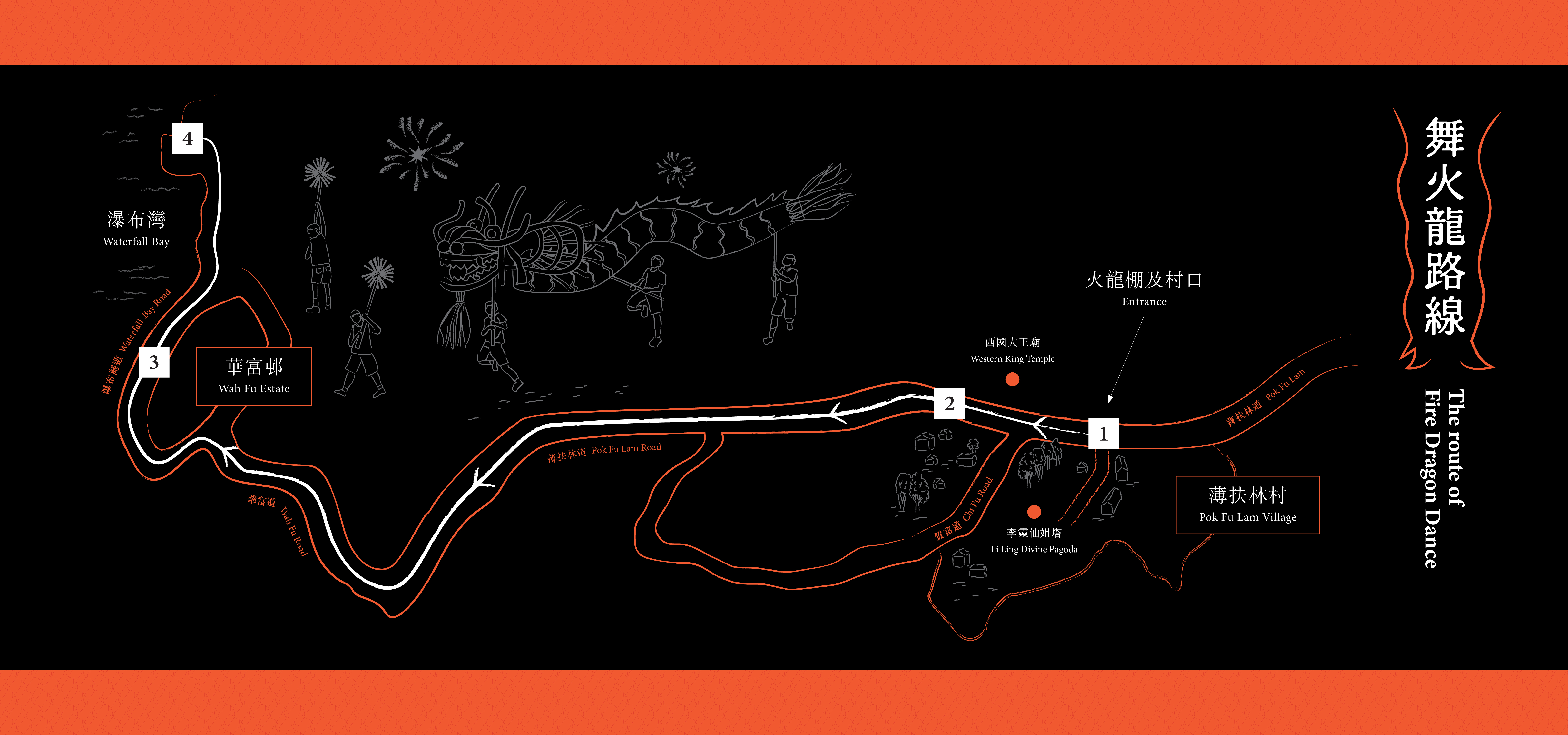
Worship ceremony at the entrance of Pok Fu Lam Village.
7:00 PM
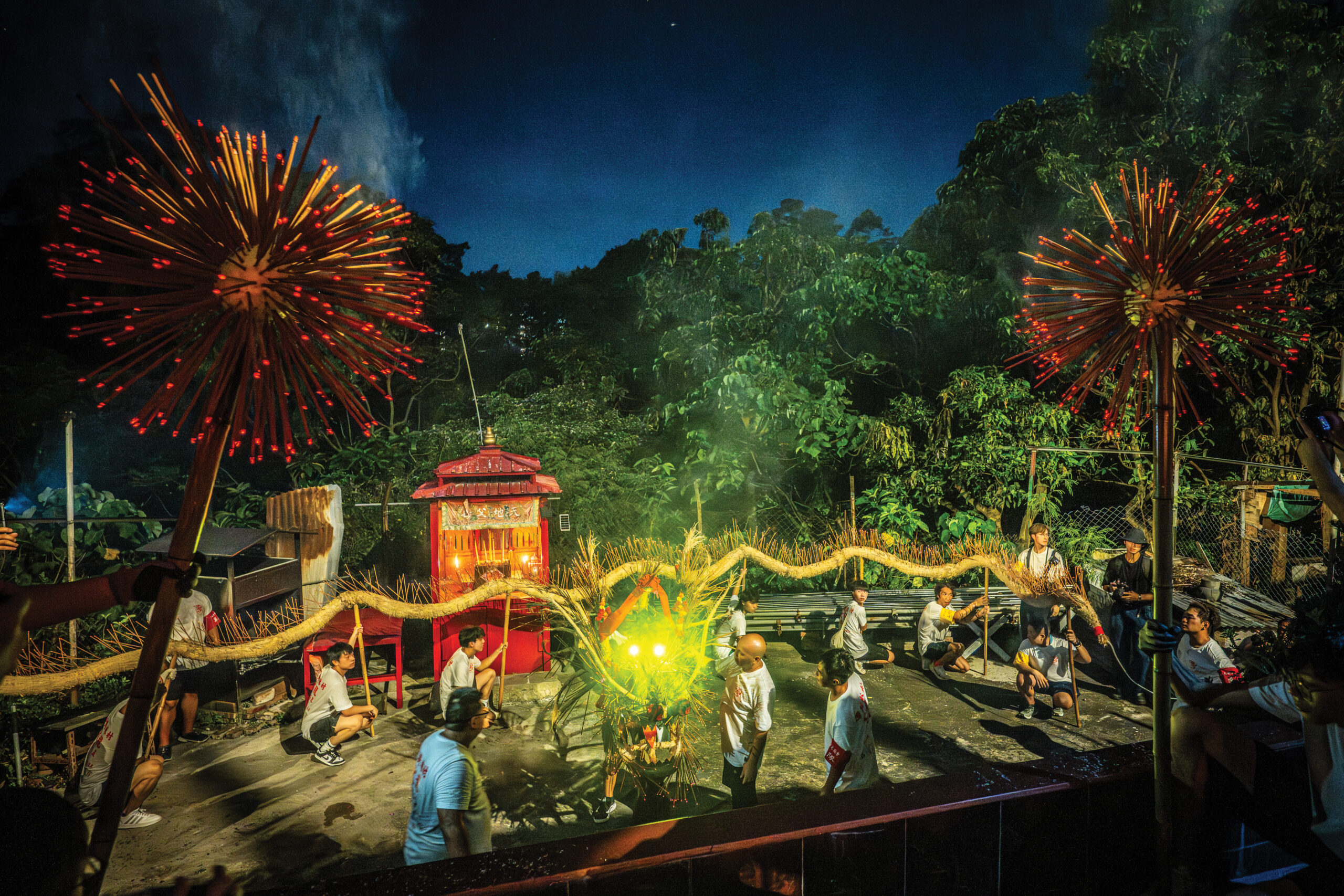
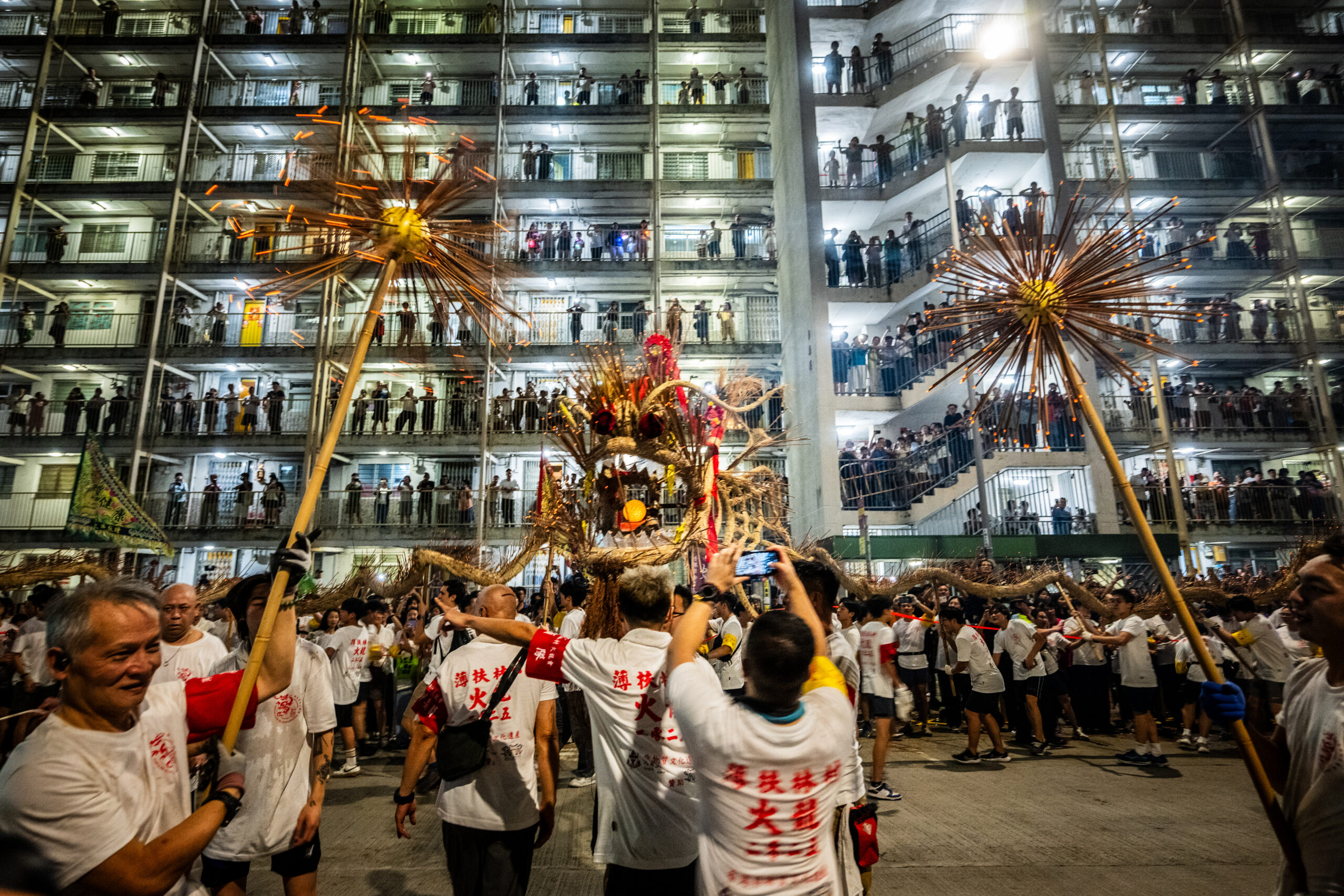
After the “Eye-dotting” ceremony, the fire dragon begins to move, performing its first dance of “Coiling Dragon Emerging from the Cave” or “Circling” outside the southbound bus stop of Pok Fu Lam Village to express gratitude and blessings. Then, it proceeds to pay respects to the Goddess, Li Ling Divine and another God, the Western King. After that, the fire dragon enters the village for a parade, offering blessings to each household along the way.
10:00 PM
The fire dragon moves again, performing the second “Circling” dance. Then it heads towards Wah Fu Estate, performing the third “Circling” dance outside Wah Lok House.
00:00 AM
The final ritual known as the “Dragon Returns to the Sea” takes place at Waterfall Bay. After the ceremony, villagers retrieve the fire dragon from the sea and bring it ashore, concluding the whole event.
“Fire Dragon Dance has brought colours to my life!”
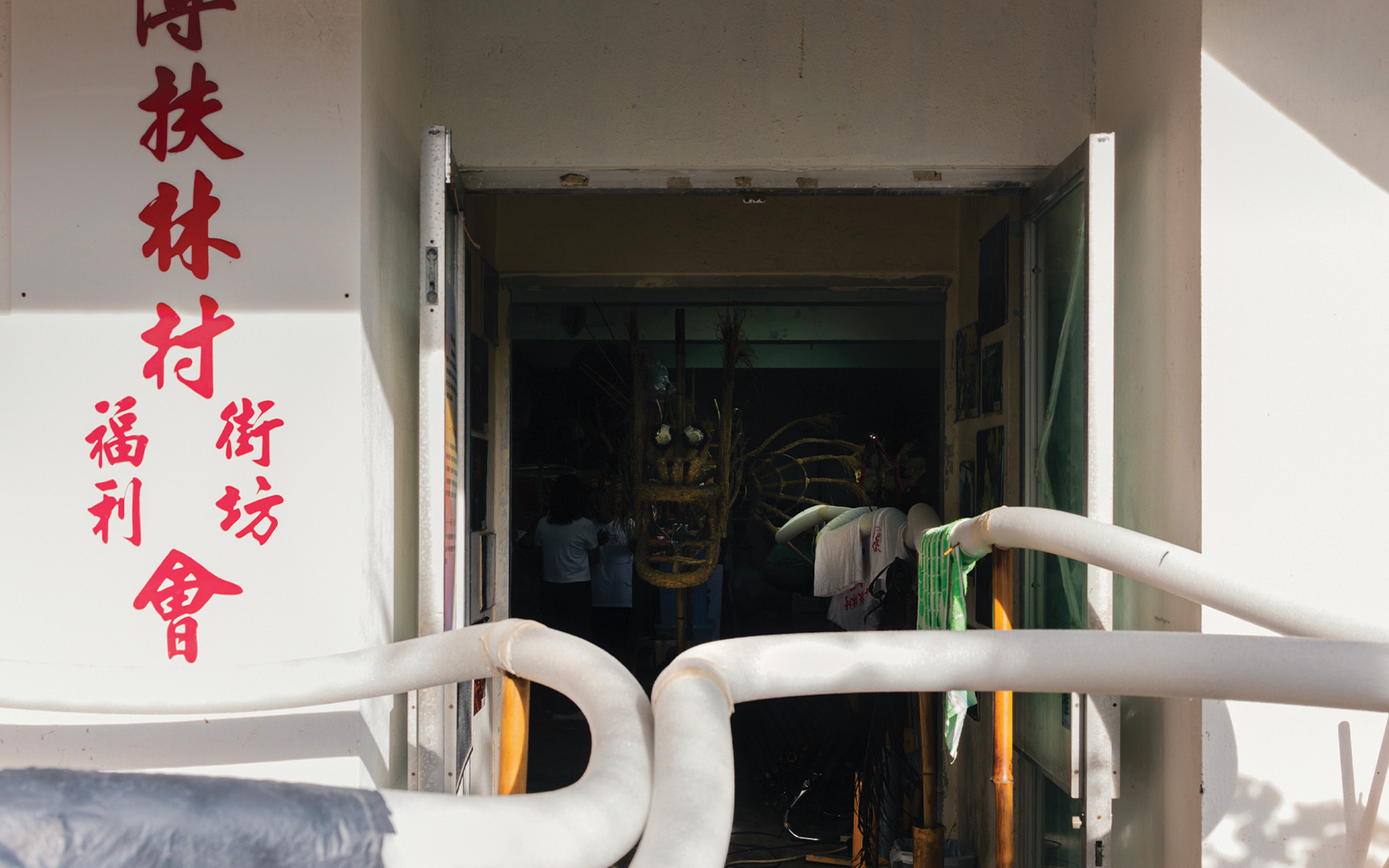
Every year before the Mid-Autumn Festival, members of the Pok Fu Lam Village Fire Dragon Association get busy preparing for the Fire Dragon Dance. On the day, we arrive at the Hong Kong Pokfulam Village Kaifong Welfare Association to see how the Director of the Fire Dragon Association Alun Siu (Siu) and his apprentice Edmond Lee (Edmond) are hustling and preparing for this year's event.
Although Edmond is not a resident of Pok Fu Lam Village, he was inspired by Siu and has been paying frequent visits to this old village over the past decade to help out at the event. Siu and Edmond met fifteen years ago through diving classes — Edmond received instruction from Siu, progressing from Open Water Diver to Master Scuba Diver certification class. And since Rescue Diver learners are required to obtain a first aid certificate, Siu invited his students to serve as first aid volunteers during the Fire Dragon Dance event, and Edmond was one of them.
Edmond fondly recalls his inaugural experience with the Fire Dragon Dance: “It was on Mid-Autumn Festival night, after the traditional worship ritual at the village entrance, the fire dragon performed the ‘Circling’ dance and entered the village. I was especially moved as I followed the fire dragon visiting each household, exchanging greetings of ‘Happy Mid-Autumn Festival’ and ‘Good health.’” Some villagers took incense sticks from the fire dragon to bring home, while others added their own incense to it. “Collective joy and unity of the community left a lasting impression on me. Such neighbourhood bonding is rare in today's big cities.” Edmond remembers.
Since then, Edmond has returned every year to assist with the Fire Dragon Dance. He jokes that even his role in maintaining order at the village entrance brings him satisfaction. Over the years, Edmond has progressed from a volunteer to Siu’s immediate assistant. Most recently, he has even taken on the role of Managing Supervisor of the Pok Fu Lam Village Fire Dragon Association, contributing to all aspects of organising the event, including the crafting of the dragon itself. Edmond, who has loved dragon culture since childhood, reflects: “I was born in the year of the Dragon, and it’s the fire dragon that led me to Pok Fu Lam Village. It is an interesting destiny.”
Originally working in the shipping industry, Edmond recently transitioned into a role as an instructor at sheltered workshop, where the disabled receive suitable vocational training. Although his profession may seem far removed from traditional culture, his passion for the Fire Dragon Dance inspires him to share the tradition in meaningful ways. He organises fire dragon-making classes at sheltered workshop to teach disabled persons the craft. He exclaims, “Participating in the Fire Dragon Dance has brought colours to my life!”
Blooming in every colour
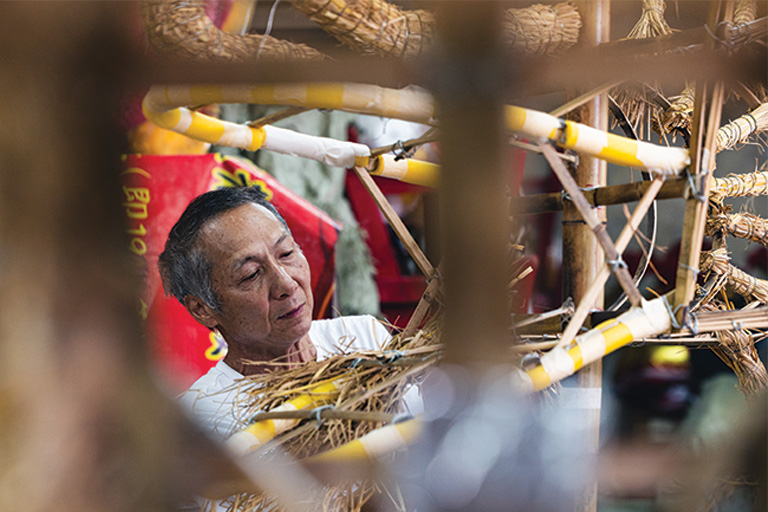
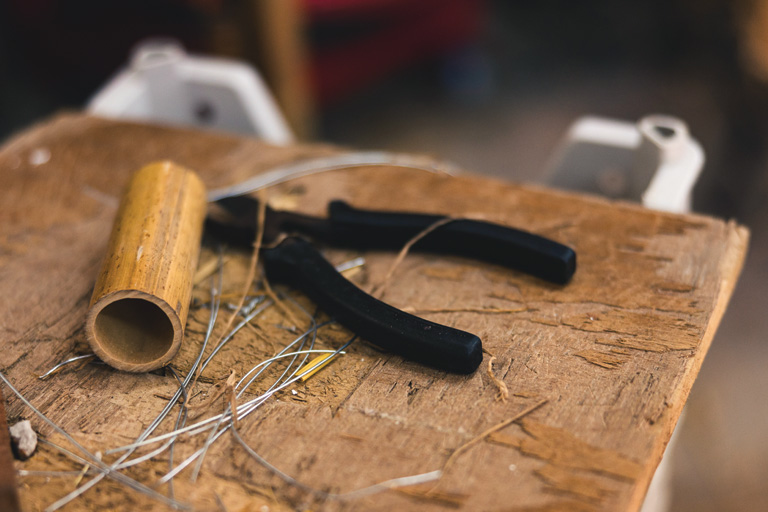
At the Kaifong Welfare Association where the Fire Dragon Association is located, Edmond shares his experiences while Siu bustles about, attending to various tasks. Eventually, he returns to the dragon's head and resumes laying straw onto it. With every inch or two set, he wraps wires around it to secure the straw firmly in place. Don't be fooled by how easy he makes it look—Siu learned every step of the fire dragon-making process by himself: from chopping and cutting bamboo, building a frame, layering straw, decorating, inserting incense, to applying the final touches.
Back in the 1960s-70s, Siu says, the Fire Dragon Dance in Pok Fu Lam wasn’t centrally organised like it is today. Different groups around the village each built their own dragon. He recalls, "Every Mid-Autumn Festival, Pok Fu Lam Village felt like a village of fire dragons. Each alley had its own big and small fire dragons. At its peak, there could be up to nine fire dragons weaving through the alleys."
When Siu was a teenager, he and some friends tried to build their own fire dragon, imitating what they’d seen. But since his family wasn’t originally from Pok Fu Lam Village—his family only moved to the village when he was two—his father didn’t know how to make a fire dragon. Siu had to hide behind other people’s houses, just to watch the village elders crafting the dragon. He explains, "I didn’t even know them personally, and was unsure they’d let me watch up close, so I had to observe from a distance."
It takes between ten to twenty bamboo sticks to build a fire dragon. In the past, villagers would climb to Pok Fu Lam Reservoir to cut bamboo, but young Siu took a different route: “We used to sneak away with cleaners’ brooms to make dragon parts, and got chased and scolded!" They "borrowed" more than just bamboo sticks, they also “borrowed” grass from the old Dairy Farm in Pok Fu Lam to lay on the dragon’s body. Later, when the farm workers discovered their intentions, they gave them grass. However, after the farm closed in 1983, villagers tried using wetland grass, but found it too damp and prone to insects. Therefore, in recent years, grass has been brought in from mainland China.
“Every Mid-Autumn Festival, Pok Fu Lam Village felt like a village of fire dragons. Each alley had its own big and small fire dragons. At its peak, there could be up to nine fire dragons weaving through the alleys.”
Rooted in detail, moving with the times
When asked if the dragon-making process is difficult, Siu replies, "It's just how it is." It may sound simple, but every step requires meticulous attention—especially the dragon's body. Since Pok Fu Lam Village is a maze of tight alleys and closely packed houses, building a dragon that is both magnificent and nimble enough to weave through the lanes is no small feat. Siu explains, "Every inch must be carefully calculated."
To make the fire dragon appear sturdier without significantly increasing its weight, Siu came up with the idea of wrapping the dragon's frame with floating strips used by swimmers. Later, he discovered an industrial-grade material for wrapping steel bars, which he could use for wrapping the bamboo frame to make it look thicker. “I’m sure I’m the first person to devise this method!” He proudly says.
Moreover, the fire dragon uses 6,000-7,000 incense sticks every year. After multiple experiments, Siu and his team discovered a variety called “lotus incense” which generates less smoke, has a more pleasant fragrance, and is sturdier than the ordinary incense sticks used in temples—making it less likely to break during the dance. Therefore, they adopted it for use throughout the dragon's body.
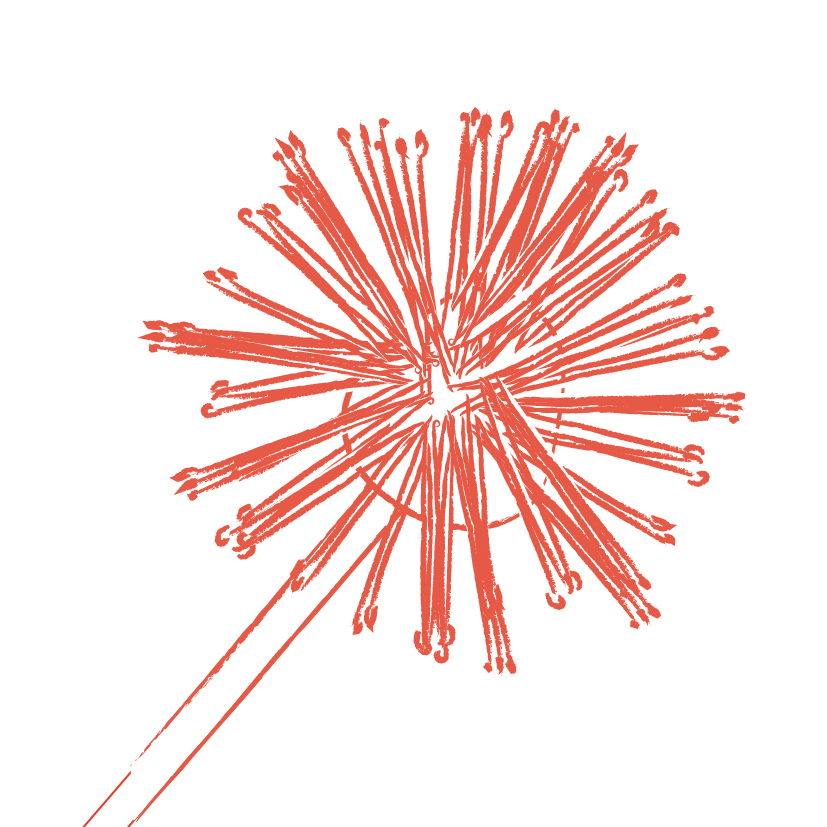
Dragon pearl
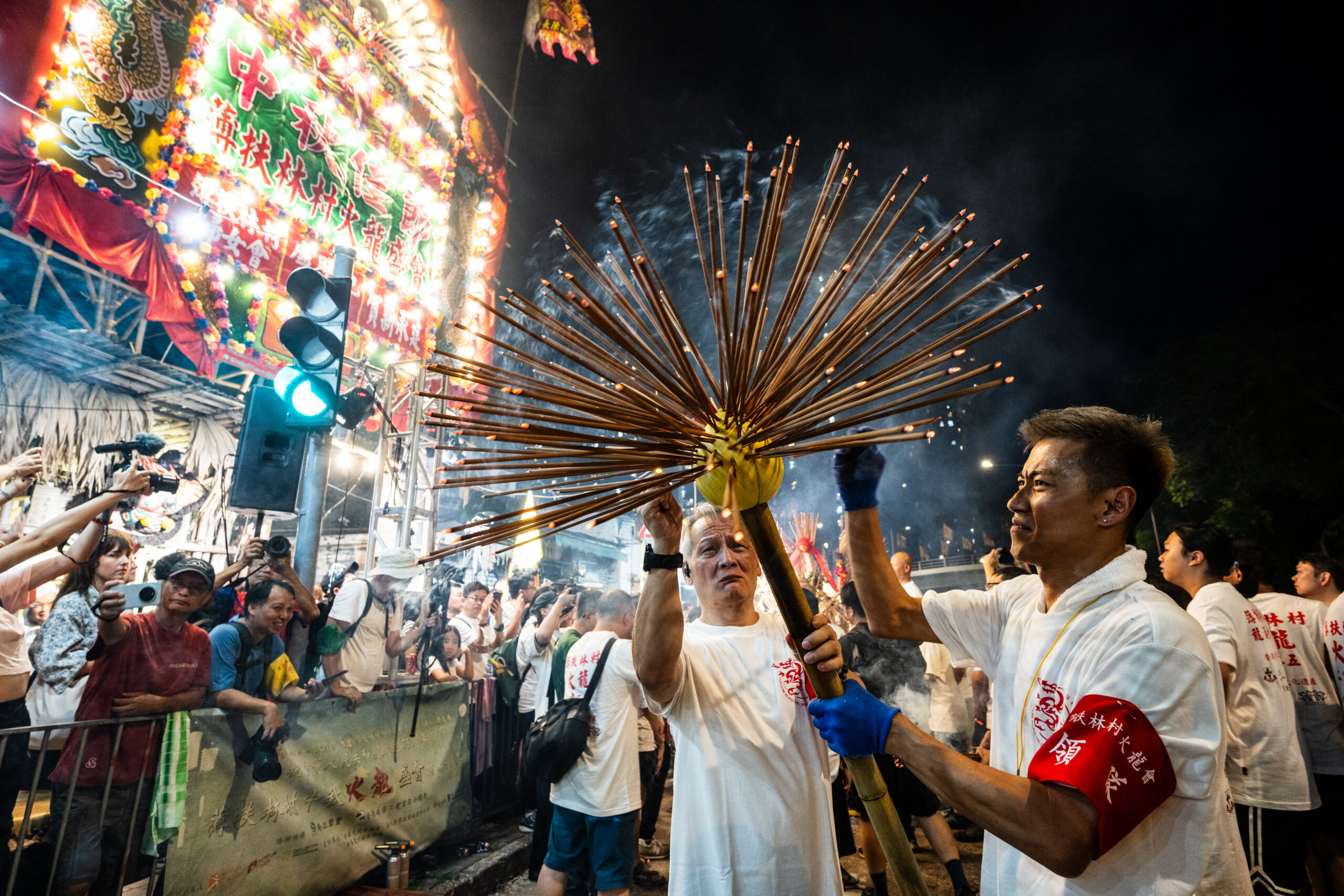
A pomelo filled with incense sticks leads the fire dragon to roam through the streets and alleys of Pok Fu Lam Village.
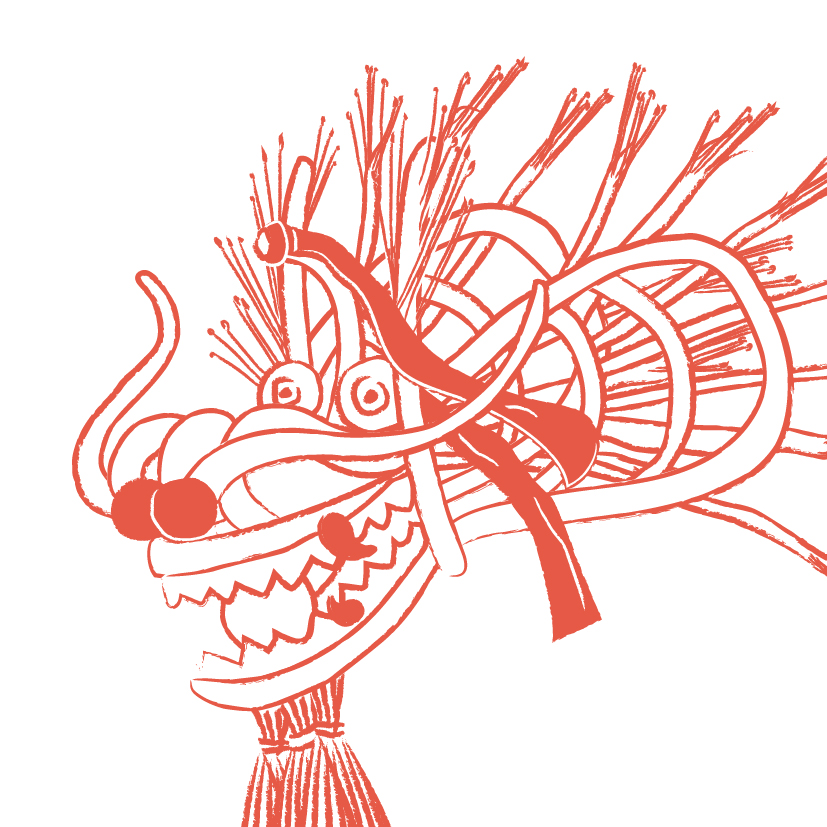
Dragon’s head
The dragon’s head frame is mainly constructed from three vertical and three horizontal short bamboo poles. Bamboo strips are bent to form the dragon’s facial features and tentacles, roots of the Chinese Banyan in the village are used to form the moustache of the dragon, and flashlights serve as the dragon’s eyes.
Dragon’s body
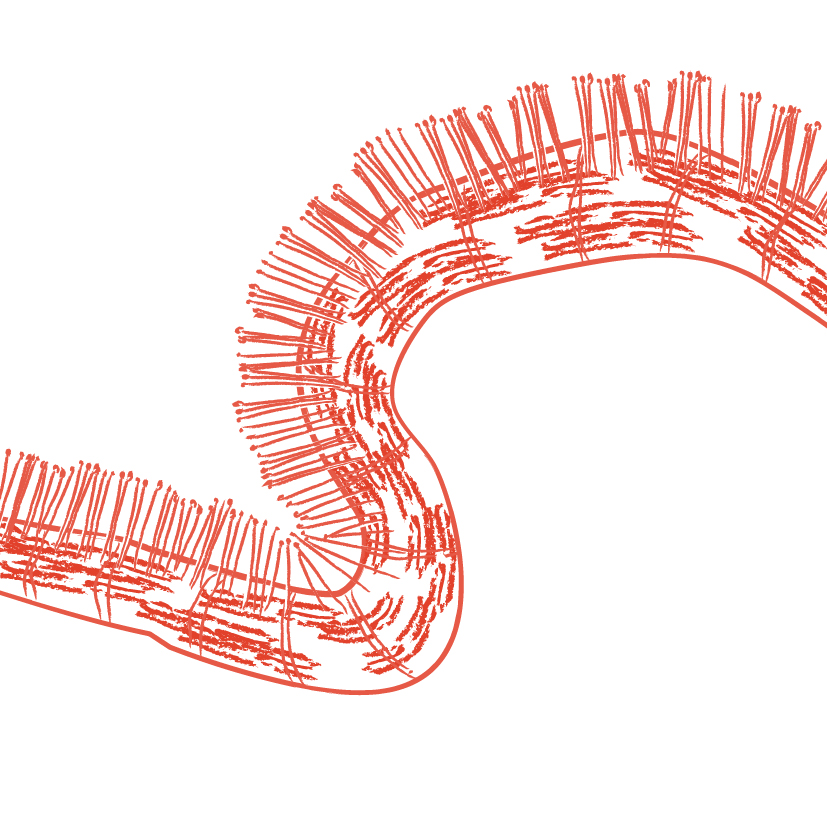
The dragon’s body frame consists of multiple T-shaped bamboo structures. These bamboo frames are covered with straw and secured with wires.
Dragon’s tail
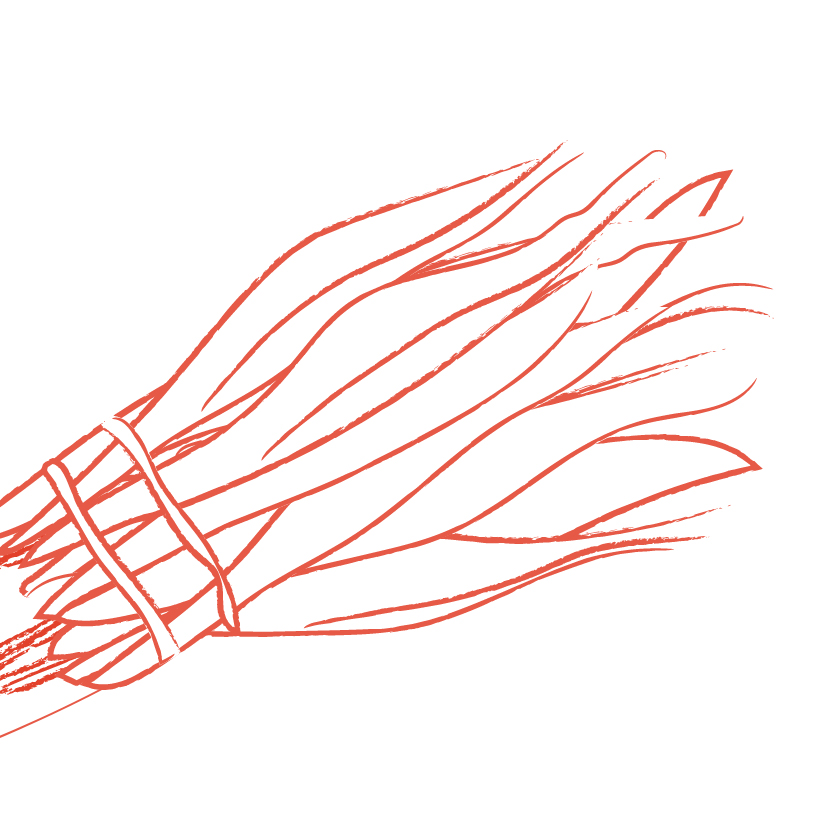
The dragon’s tail is fashioned from Chinese Fan-palm leaves, symbolising protection from wind and rain. Pomelo leaves are used to create the dragon’s horns, representing the dispelling of negative energy.
A decade of reformation
Siu personally takes care of all the event details for the Fire Dragon Dance today, and has taken on the key role of organising the event merely over the past decade. In his twenties, Siu moved to the city, met his wife, and started a family. As his parents aged, he and his wife decided to move back to Pok Fu Lam Village to live with them. In 2008, he decided to join the Fire Dragon Association. At that time, there were just a few committee members in the Association. Yet, Siu believed that only through establishing a formal organisation could the tradition be sustained in the long term. Therefore in 2015, after becoming one of the top decision-makers of the Fire Dragon Association, he helped register the group as an official society.
Creative and innovative, Siu introduced a series of reforms to the Fire Dragon Association. He established a formal volunteer recruitment framework, opening participation not only to villagers, but also people from diverse backgrounds and regardless of gender. At first, volunteers mainly helped with crowd control—now many also take part in the Fire Dragon Dance itself. Though it seems only 24 people perform the dance—four holding the dragon’s head, two holding the dragon pearls and 18 gripping its legs—the event actually depends on the efforts of hundreds of people, spanning months of endeavour!
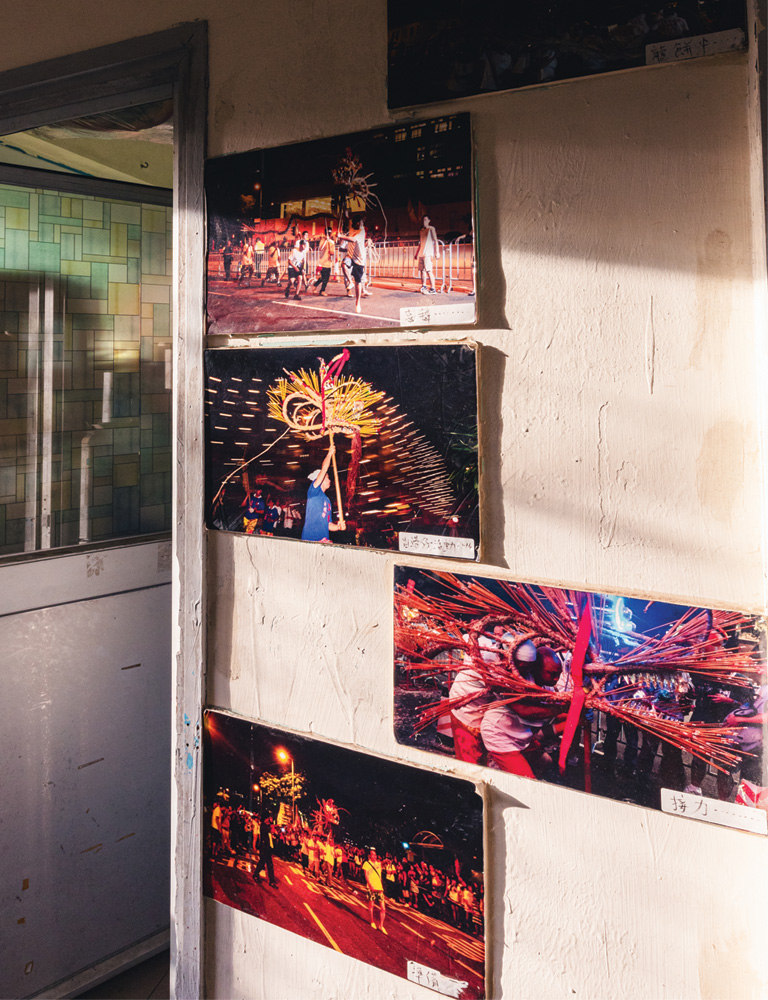
“Though it seems only 24 people perform the dance—four holding the dragon’s head, two holding the dragon pearls and 18 gripping its legs—the event actually depends on the efforts of hundreds of people, spanning months of endeavour!”
Dancing beyond Pok Fu Lam
The biggest challenge Siu faced after assuming leadership at the Fire Dragon Association was not personnel or logistics, but the unpredictable epidemic—echoing the origins of the Fire Dragon Dance tradition over a century ago, when a plague struck the village.
In 2020, the COVID-19 pandemic led to the suspension of many public events in Hong Kong and the Pok Fu Lam Village Fire Dragon Dance was no exception, with public access restricted to members of the Fire Dragon Association and villagers. Unlike previous years, the dragon did not visit individual households; instead, it served as a village parade ritual. Siu said that he hoped to continue the tradition, noting that historically, the Fire Dragon Dance was intended to ward off epidemics and bring blessings. After several rounds of discussions and coordination, the event was successfully held, adhering to COVID-19 compliant measures and group gathering restrictions.
Siu has dedicated decades to the Fire Dragon Dance. When asked about his enduring involvement, he says he feels “a sense of mission”. Yet, his actions and the way he crafts the fire dragon speak volumes. Initially, only two dragons were required for the two-day event. However, at the Kaifong Welfare Association, five dragon heads are under construction. Siu explains: “The three additional heads serve distinct purposes: one is for the young generation to practice crafting and performing, another for performing at the Tung Wah Group of Hospitals Autumn Sacrificial Rites, and the third for performance and exhibition at Ocean Park.” Few years ago, an idea came to Siu’s mind: since the Fire Dragon Dance is a Hong Kong tradition, it should go beyond Pok Fu Lam Village. So he initiated fire dragon tours in the Southern District, including Stanley Plaza, and secured an annual performance slot at Ocean Park, bringing the fire dragon out of Pok Fu Lam Village and into the wider community.
While many believe the fire dragon has already traversed great distances, Siu envisions an even broader reach. Last year, he initiated the “Dragon Parade in 18 Districts,” offering the public an opportunity to experience the dragon up close, well before the Mid-Autumn Festival. Additionally, Siu and his team have conducted performances and lectures at primary and secondary schools, as well as various community organisations. They have also organised dragon-crafting workshops, providing individuals of all ages and backgrounds with the chance to engage with this traditional cultural art form and intangible cultural heritage.
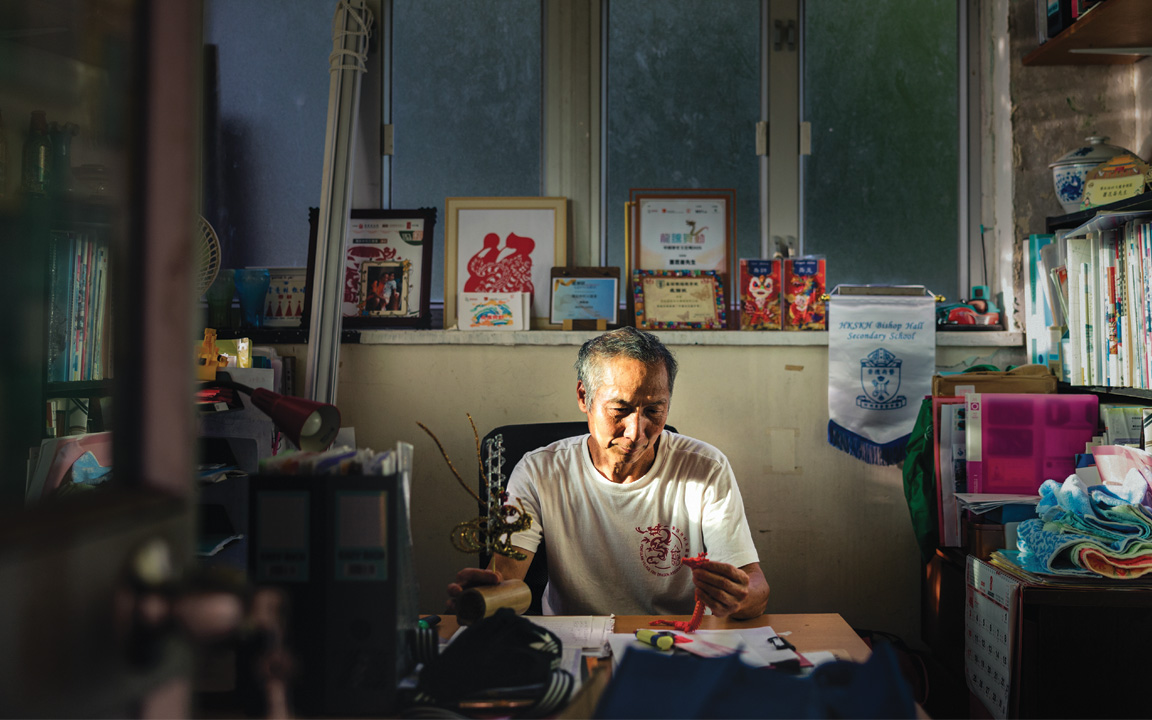
As Siu shares his story, he suddenly picks up a toy dragon, manipulating it thoughtfully between his fingers. He explains that he is using the toy as a reference to refine the design of the dragon's head. “See, I’ve sharpened the horns and made them curve outward—thanks to this little model,” he remarks. At 63, Siu remains a keen learner, never considering retirement. He finds particular joy in seeing his teenage son take an interest in crafting fire dragon. Siu reflects: “Everything finds its way. Although I wasn’t born in Pok Fu Lam Village, I grew up here. It’s where my roots are, and I can’t leave them behind. As long as I’m able, I’ll continue to uphold the Fire Dragon Dance tradition and share it with the wider community.”
“Although I wasn’t born in Pok Fu Lam Village, I grew up here. It’s where my roots are, and I can’t leave them behind. As long as I’m able, I’ll continue to uphold the Fire Dragon Dance tradition and share it with the wider community.”