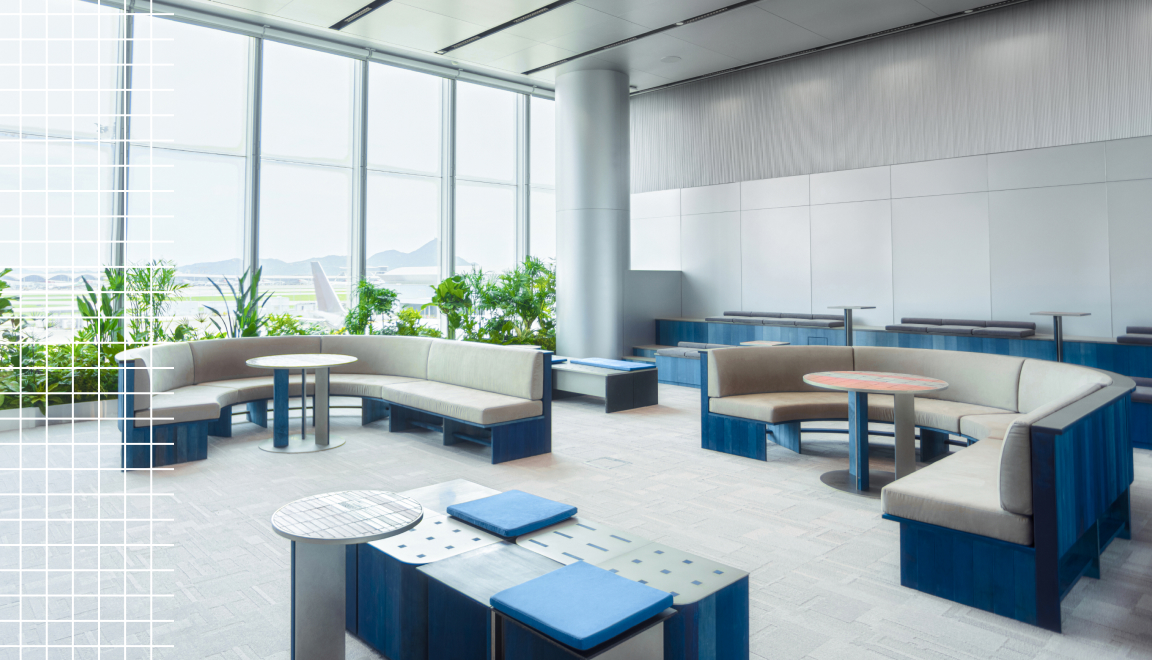
Every major city typically comprises interconnected elements such as airports, transportation hubs, markets, factories, commercial and residential areas — and often a central shared public space for gatherings, communications, and various creative activities. This space nurtures connections between diverse groups, playing a crucial role in shaping the city’s culture and identity.
In the same way, the new Hactl Think Park is a total re-imagining of Hactl’s well-established former Training Centre, comprising various specialised areas addressing multiple needs. “The Lab” is a multifunctional space for workshops and seminars; “The Space” is a high-tech area providing comprehensive information and resources; and multiple classrooms accommodate training sessions and events.
Fully-aligning with Hactl’s sustainability principles, degradable materials have been used throughout to minimise impact on the environment. Hactl Think Park is more than a venue for skill development and knowledge acquisition: it also serves as a platform to promote Hactl’s vision and culture to visitors and students, and aims to inspire limitless innovative possibilities.
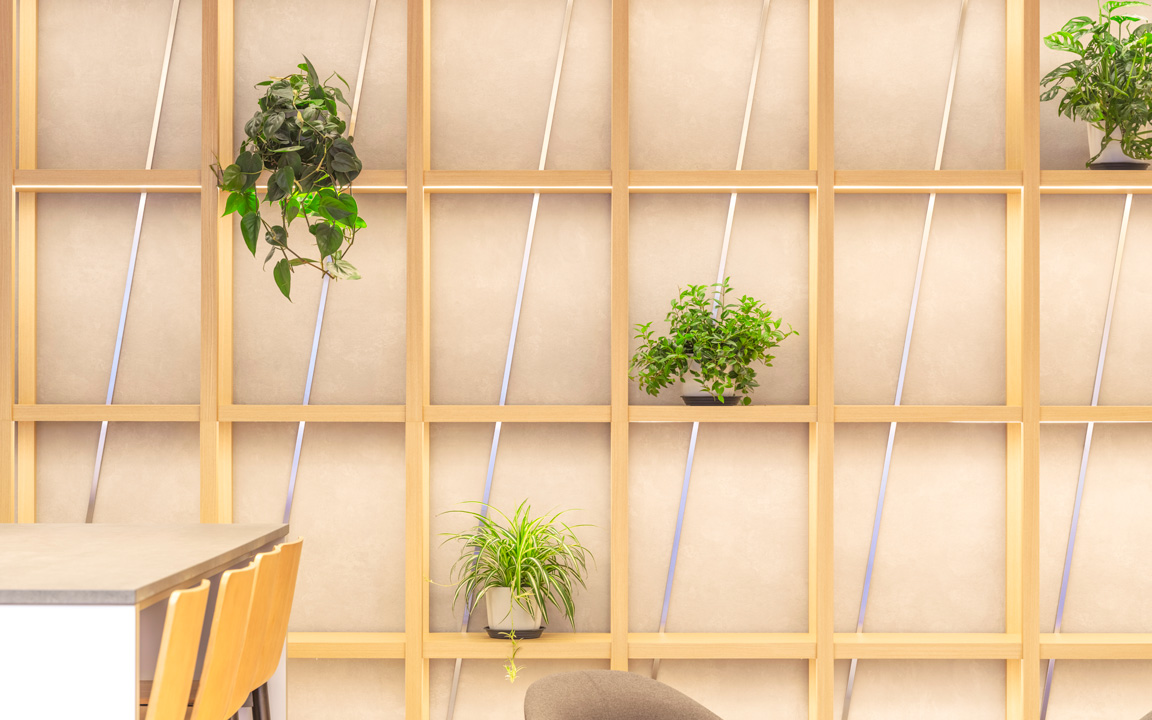
Dynamic and Interactive Lobby
Dio Wong, designer of Hactl Think Park and co-founder of 430 Limited shares his vision: “The name ‘Park’ does not simply refer to a traditional park; it symbolises a place that bridges private and public use. It combines multiple purposes, facilitating a wide range of activities.”
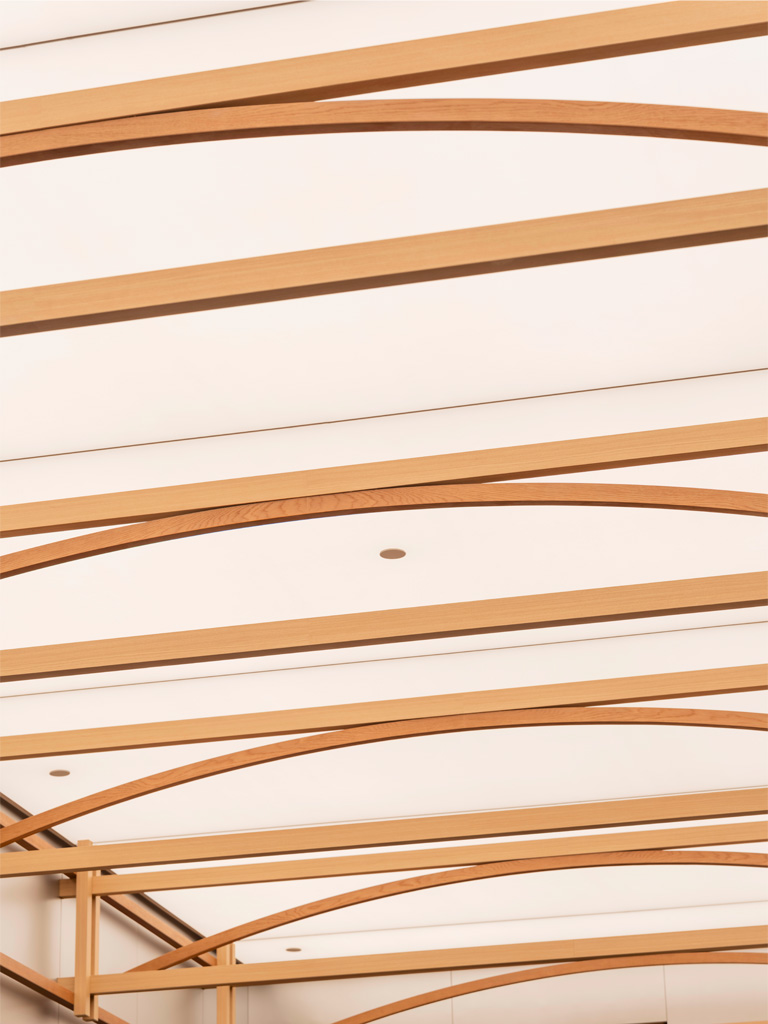
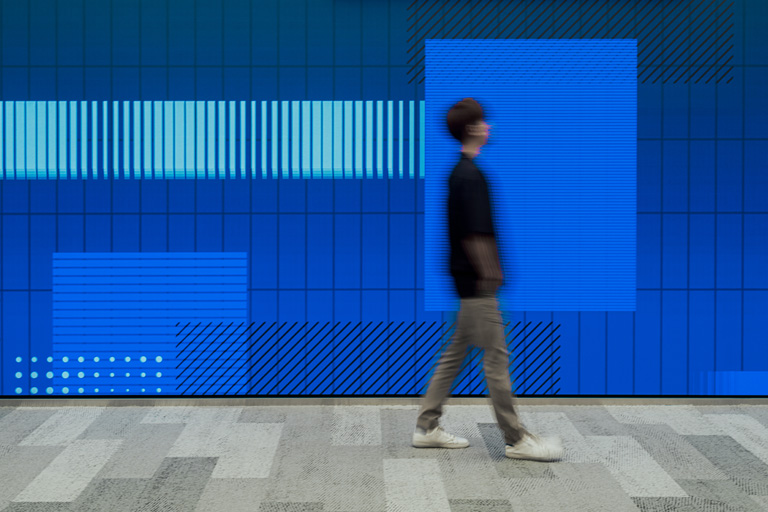
To bring his vision to life, Dio designed a large canopy projector to be installed on the ceiling in the lobby entrance, simulating changes in daylight using advanced LED technology, so creating a sense of time passing. Meanwhile, a 12-metre-long LED display uses Hactl’s visual collateral including animations, images and other creative resources, enabling visitors to learn about the company’s latest projects and developments.
The name ‘Park’ does not simply refer to a traditional park; it symbolises a place that bridges private and public use. It combines multiple purposes, facilitating a wide range of activities.
Dio Wong
Designer of Hactl Think Park
Integrating Eco-friendliness and Creativity
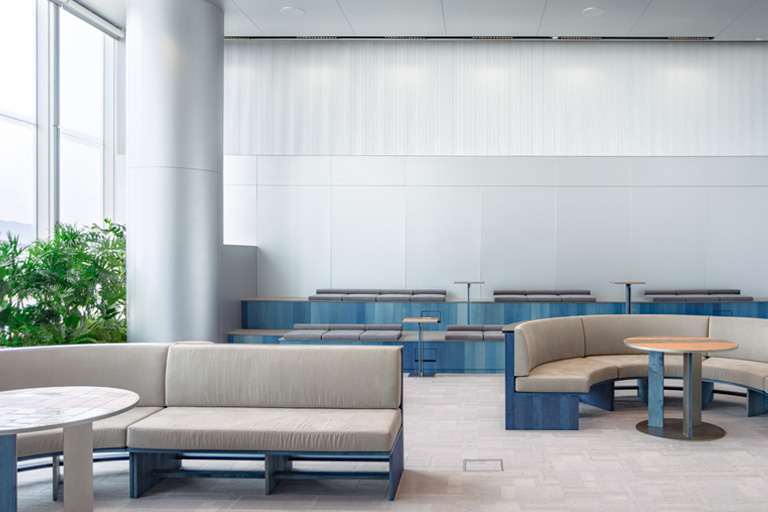
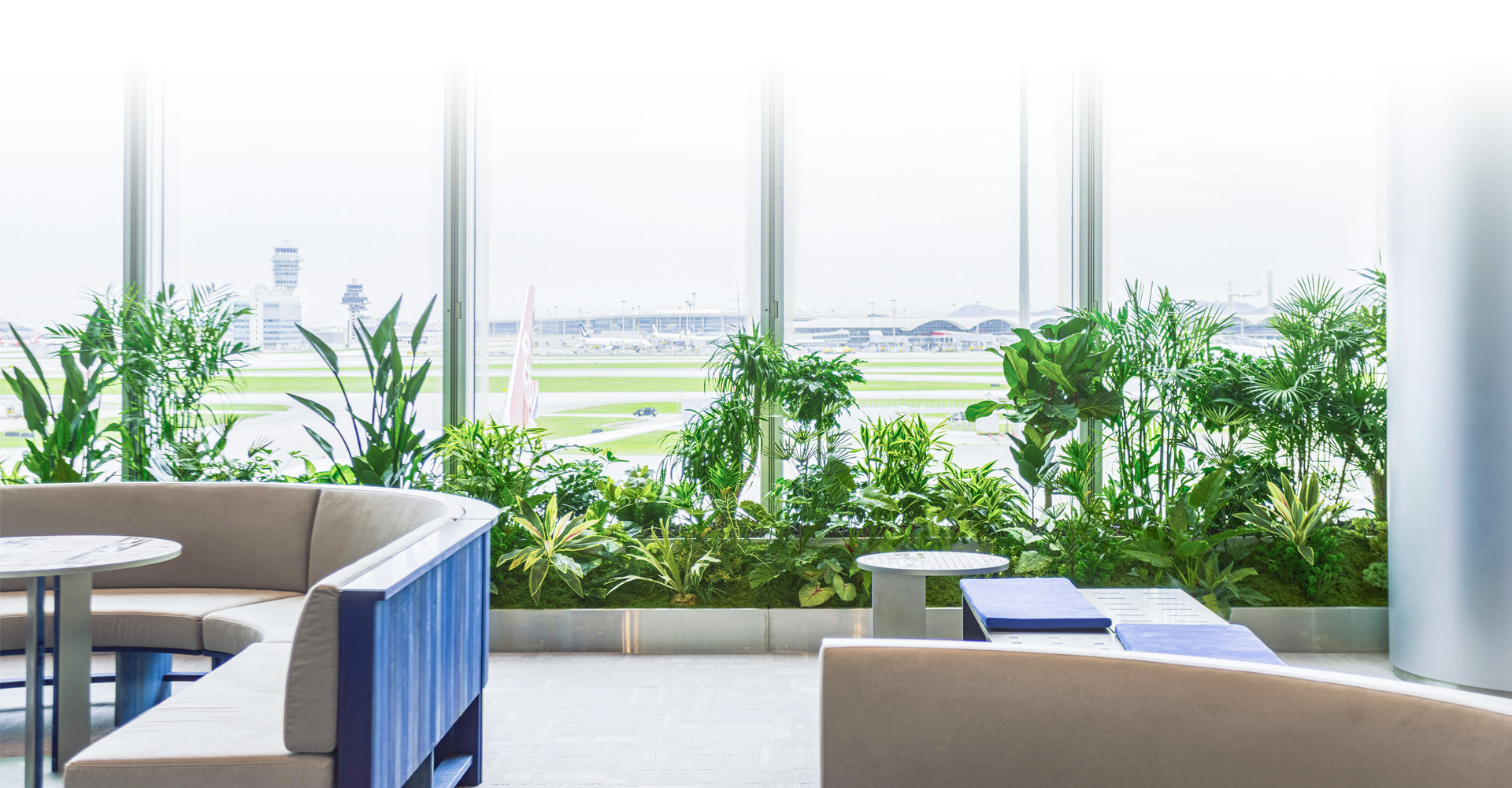
As the core area of Hactl Think Park that illustrates the integration between eco-friendliness and creativity, The Lab incorporates abundant natural light and an extensive view of the ramp, enabling visitors to feel closely connected to the outside environment while remaining indoors. It is more than a simple exhibition venue, also functioning as a creative laboratory where the concept of upcycling is given substance. All furniture and installations have been created by four eco-conscious local design studios — Gaau1 Up Design Studio, Cou Tou Studio, Lantau Blue, and TMML Studio — using eco-friendly materials and local waste to bring their unique perspectives to the reinterpretation of the term “waste”.
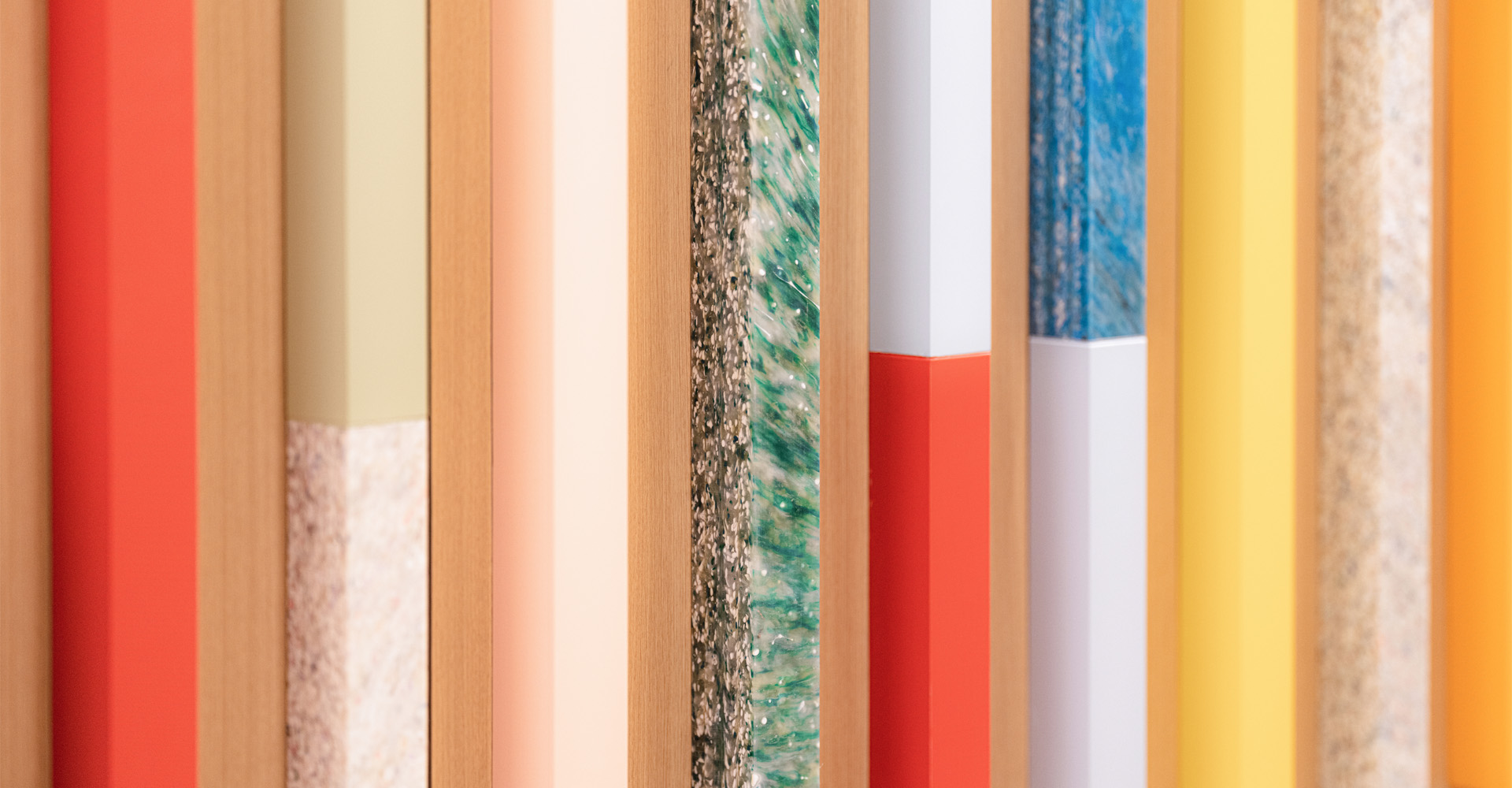
Established in 2016, Gaau1 Up Design Studio focuses on upcycling, turning plastics waste into functional art pieces. Its founder Ian Hui explains that their inspiration came from a Dutch designer, who broke the traditional factory streamline concept and brought the process of upcycling into the community.
Ian collected pallet wraps from SuperTerminal 1 and turned it into raw plastic granules, which were then transformed into furniture and wall art installations. Ian explains: “We value our collaboration with Hactl, and together we have brought the concept of the circular economy to life. It’s a great way of redefining the value of ‘waste’ — turning it into parts of Hactl Think Park.”
To ensure the colour of the raw plastic granules matched the requirements of the final design, Ian sorted the pallet wraps into different colours. Ian also collected different colour bottle caps from the community, mixing them with the pallet wraps to create vibrant and unexpected art pieces and furniture materials.
“We value our collaboration with Hactl, and together we have brought the concept of the circular economy to life.
Ian Hui
Founder of Gaau1 Up Design Studio”
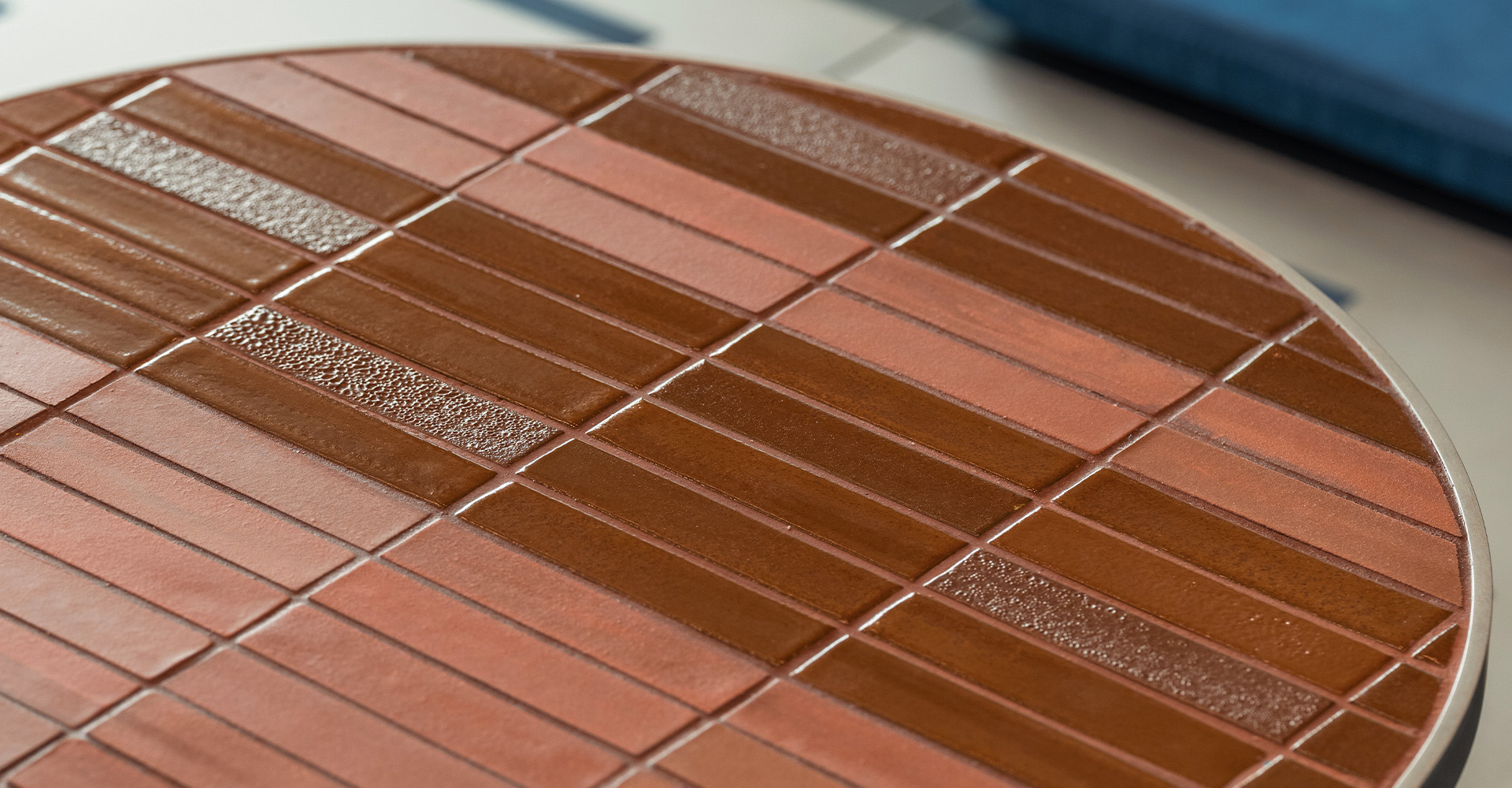
TMML Studio meanwhile focuses on collecting unwanted earth material from local construction sites, to create ceramics that combine functionality and aesthetics. Founder Niko Leung explains the process of making the tabletops in The Lab from the construction waste: “The soil was first sieved and ground into powder, clay powder was then mixed with other raw materials forming a clay body that could be shaped into reddish tiles. We did not grind our clay too fine, so that the tiles would keep their raw textures and details.”
To achieve the best quality and ensure the bricks could be turned into tabletops of the required size, Niko had to calculate the precise shrinkage rate of the bricks during the firing process. She concludes: “We never thought there would be a company so willing to invest in upcycling as Hactl. We hope our creations surprise users, and make them realise that waste can indeed be repurposed into useful items.”
“We never thought there would be a company so willing to invest in upcycling as Hactl.
Niko Leung
Founder of TMML Studio”

A stage for creativity
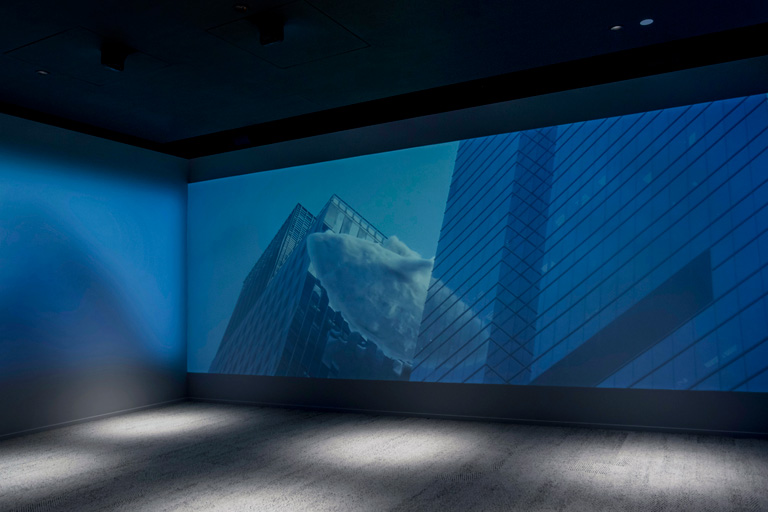
The Space is an immersive and interactive stage integrating visuals, interaction and information — creating an experiential platform that blends high-tech and creativity. Designer Dio Wong explains: “The Space is an independent area, and a window to the external world where we showcase Hactl’s innovative projects and technologies.” The Space can be a platform for education, marketing promotion, or sharing, with visitors treated to a brand-new visual journey each time they enter.
Multifunctional classrooms
Hactl Think Park features six classrooms, each designed for different educational purposes. The art installations in the classrooms portray Hactl’s systematic management style and reflect the closely-controlled and precise action of Hactl’s mechanised storage systems.
These classrooms are suited to traditional teaching methods, but are also equipped with innovative educational tools. For instance, participants may learn how to drive a forklift using VR forklift simulators, while another classroom features a full-size ULD, enabling participants to learn how to handle cargo correctly using actual handling equipment. “We hope to systematically organise and store all aspects of the Hactl complex,” adds Dio, “so that instructors can demonstrate each handling process and enable learners to grasp the key points.”
New possibilities
The establishment of Hactl Think Park demonstrates Hactl’s commitment to optimising its facilities and achieving its visions. Compared to the former Training Centre which it replaces, the new Hactl Think Park is not only more modern, but is also equipped with advanced technologies promoting learning efficiently, and comfortably — a reflection of Hactl’s human-centric principles.
Calvin Wong, Learning and Development Manager (Operation Training) of Hactl, shares his view of the upgraded facility that is Hactl Think Park: “Traditional training relies heavily on lecture notes, books and paper-based examinations. But Hactl Think Park has incorporated a variety of digital devices, and digitalised many learning resources. Teaching materials can now be displayed on screens, facilitating participants’ learning and understanding during the classes.
“The advantage of digitalisation is receiving immediate feedback. Participants can check their examination results immediately and learn from their mistakes. This enhances the effectiveness of learning, allowing participants to focus on addressing their weaknesses. Furthermore, the innovative and environmentally-friendly design of Hactl Think Park reflects the company’s sustainability and carbon reduction principles.”
Potential users from our industry will be more confident in our training when they see this new, comfortable training environment with its advanced equipment.
Calvin Wong
Learning and Development Manager (Operation Training) of Hactl
Enhanced equipment can greatly increase training efficiency. The new classrooms now incorporate VR simulation systems, allowing participants to learn in a more realistic environment, and providing more flexibility in teaching. Calvin continues: “In the past, some of the operational processes could only be demonstrated in the terminal or on the apron, but every student can now safely experience real-life operation using VR scenarios.”
Carmen Lam, Learning and Development Manager (Staff Development) of Hactl, also speaks highly of the new design of Hactl Think Park: “It uses more natural light, so learners will be able to relax and become more engaged in their training. The atmosphere is ideal for strengthening interaction and communications, and reflects Hactl’s willingness to invest resources in talent training.”
“It uses more natural light, so learners will be able to relax and become more engaged in their training. The atmosphere is ideal for strengthening interaction and communications, and reflects Hactl’s willingness to invest resources in talent training.
Carmen Lam
Learning and Development Manager (Staff Development) of Hactl”
The flexibility that The Lab brings to users also pleases her, with instructors able to arrange their courses more flexibly to enhance learners’ participation and interaction. “We can arrange the furniture in the classrooms flexibly, for example holding a traditional lecture in the morning, then rearranging the tables and seats in the afternoon for a group discussion or interactive activities.” Carmen explains.
Beyond providing hard and soft skills training, Hactl Think Park also enhances Hactl’s competitive edge. “It does not only appeal to Hactl staff, but also external users,” Calvin explains: “Potential users from our industry will be more confident in our training when they see this new, comfortable training environment with its advanced equipment.”
The birth of Hactl Think Park demonstrates the upgrading of Hactl’s facilities and vision for training, and marks a further milestone in its sustainability journey. With the extensive use of upcycled materials in its architecture; its use of natural light and energy-saving equipment; the digitalisation of training materials; and its collaboration with eco-conscious local design studios to bring the zero-waste concept to life, Hactl Think Park is much more than just a training centre. It provides a showcase for the aviation industry’s green vision for the future. Through this new space, Hactl aims to nurture a new generation of minds which will integrate sustainability into their actions, demonstrating — both to the industry and the public at large — the power and possibilities of green transformation.