

As Andy Warhol once said: “Don’t think about making art, just get it done”. Much the same could be said about the air cargo industry when it comes to moving art of all kinds around the world. Except that’s not quite true; the skills and dedication behind “just getting it done” would amaze most people who have no idea of the complexities behind moving world famous, precious objects, including fine art from one location to another.
We take a look at the roles of the specialist artwork movers who deliver beautiful and often highly valuable pieces on time and in perfect condition for an opening night. It’s a chain of people and companies who must work in total harmony to deliver these valuable works of art, from gallery owners, cultural programmers and museums to the cargo carriers and their chosen handlers.
One leading light is Karen Chang who is the co-founder of Globe Creative in Hong Kong which specialises in creating transformative exhibition experiences. Her work turns history’s mysteries, forgotten treasures, fascinating animals, art, relics, and science wonders into immersive experiences that leave a lasting impact with audiences in Hong Kong and beyond.
Partnering with the world’s leading museums, Globe Creative’s curated exhibition journeys attract thousands of visitors. From the British Museum in London to the Centre Pompidou in Paris; from a 42,000 year-old baby mammoth to the world’s largest Picasso, all these precious objects have passed safely through Hong Kong thanks to the specialist care and attention they received.
In fact Pablo Picasso, an icon of 20th century art, has figured large in Globe Creative’s life over the last 20 years and more. As a founder of the Cubist movement, his prolific creativity revolutionised modern art through his work as a painter, sculptor, printmaker, ceramicist and set designer. In 2004, a giant stage curtain from the 1917 Diaghilev ballet "Parade", designed by Picasso and on loan from the Centre Pompidou in Paris, was shown at the IFC (International Finance Centre) mall in Hong Kong. On display for only three weeks, it drew a massive audience of some two million people. It was the first time the piece had been seen outside of Europe, and Globe Creative was responsible for bringing it to Hong Kong and for its safe journey to and from the event.

© Succession Picasso 2025 © Museo Casa Natal Picasso. Photo: Globe Creative
Fiercely Spanish
“Twenty years later, with the 30th anniversary of Picasso’s death just around the corner, we decided it was time to stage Picasso again, this time in a collaboration with the Spanish and the Museo Casa Natal Picasso in Málaga,” says Karen. “Picasso was fiercely Spanish, and we wanted to celebrate this by showcasing how his art was shaped and inspired by his early life in Malaga, and his beloved homeland, Spain.” Over 143 works – engravings, illustrations and ceramics – were shown at the global premiere of “Picasso: Beauty and Drama” at the Grand Lisboa Palace Resort, Macau.
Climate control and humidity are crucial in the movement of artworks and other objects, whether by air or by road, to their final destination. Security, too, is a hugely important factor in the movement of these works. “Total adherence to these three conditions is what museums and lenders require before they consider loaning out these special pieces,” says Karen. This means forwarders, airlines and handling companies must all be trusted partners and fulfil their roles to the same exacting standards.”
But before all these specialists can come into their own, every museum and lender will start the process by commissioning a facilities report of the venue where the loans will be exhibited. That report will list their conditions for display as part of a risk assessment profile. Borrowers – like Globe Creative and other recipients of the artworks – must agree to all the conditions and tick every box in respect of the freight process before they can even be considered for involvement in the loan process.
For many years Globe Creative has worked alongside Hong Kong-headquartered fine art specialist forwarder Michelle Art Services.
“To be able to do what we do, there are loads of risks,” states Karen. “We need to work with partners who understand this and have a proven track record of safely handling precious objects. It’s not just about moving something from A to B – they need to know the most direct route, the safest route and have a back-up plan – so goods are delivered in accordance to the conditions set by the lending organisation.”
“To be able to do what we do, there are loads of risks. We need to work with partners who understand this and have a proven track record of safely handling precious objects.”
Needs and expectations
Thomas Yuen is the Founder and Managing Director of Michelle Art Services and caters to an extensive range of demands for international museums, auction houses, galleries, private collectors and art exhibition organisers, all wanting specialist assistance for moving their precious goods.
In addition to the capabilities already discussed in this highly-specialised field, Thomas adds packing to the long list too. “Firstly, we need to discuss with the customer what their needs and expectations are and then we talk about specialist packing because it is vital to protect the art pieces and ensure no damage is caused to that artwork when it is on the move.”
“We need to check all special permits that may be required along with Customs documents. Packing, shipping and insurance all need to be agreed by the customer before we organise the collection of the artwork and then the delivery to the airport and cargo terminal”. Additional security can also be requested depending on the customer’s particular needs.
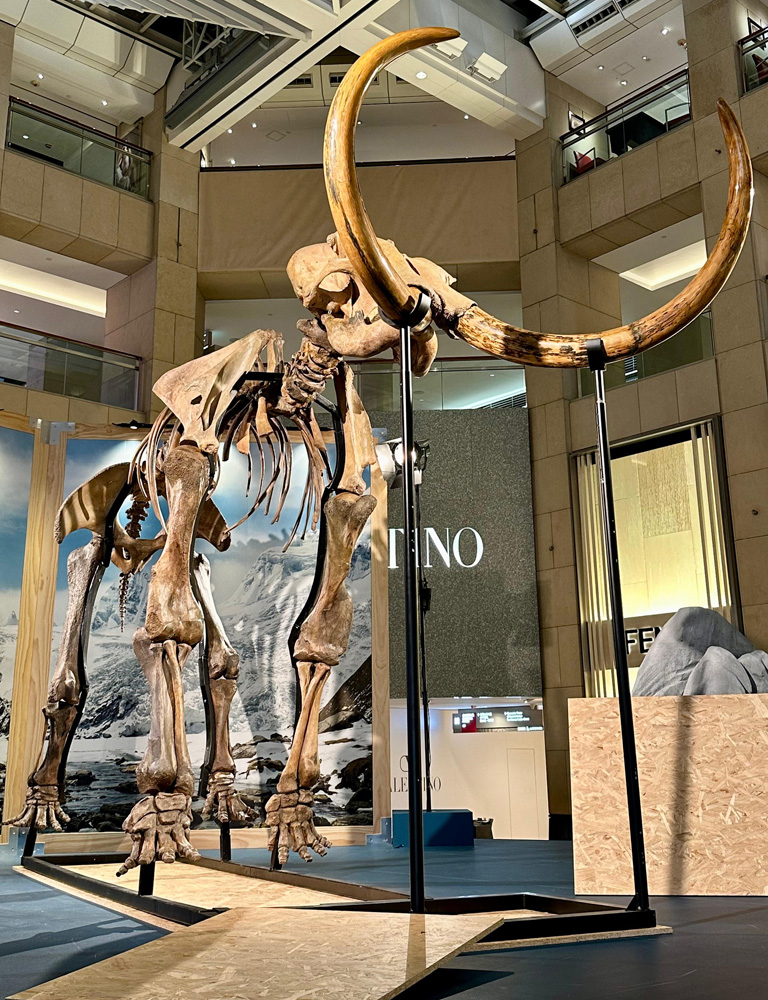
Photo courtesy of Thomas Yuen
Although specialist qualifications for handling art works are not compulsory in Hong Kong, many international museums choose to work with companies holding ARTIM (Art Transporters International Meeting) and ICEFAT (International Convention of Exhibition and Fine Art Transporters) membership which show their recognition of the necessary specialist skills for handling artwork.
Thomas adds that Hactl – with whom he has worked since the 1980s – has temperature-controlled facilities in SuperTerminal 1 which are ideally suited to handling all kinds of art, but particularly paintings. The Michelle Art Services team’s trucks for transporting artworks are equipped with air conditioning and shock-proof air-ride suspension so that they can safely bring the art into the terminal before a flight. The same applies in reverse if bringing a painting in. The artworks are usually shipped by wooden crate, and need 24 hours to slowly adjust (“de-climatise”) because the painting’s temperature will change considerably (e.g. from some 10 °C on the aircraft to around 20 °C in the temperature-controlled facility if landed in hot locations like Hong Kong).
One of the largest pieces handled by Michelle Art Services was The Flying Frenchman bronze sculpture by César Baldaccini installed outside the Hong Kong Cultural Centre facing the Victoria Harbour.
“The artworks are usually shipped by wooden crate, and need 24 hours to slowly adjust (“de-climatise”) because the painting’s temperature will change considerably.”
More than 50 years
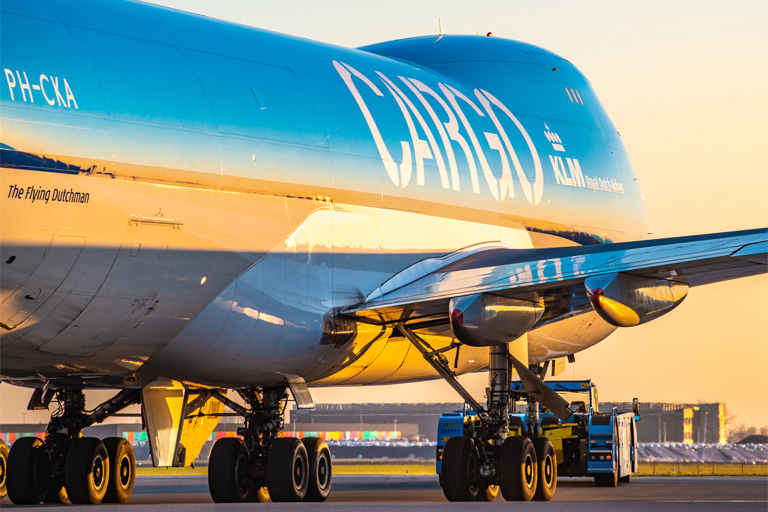
Among those carriers who welcome working with such exacting shipments, Air France KLM Martinair Cargo is a recognised specialist mover of fine art and other high value shipments. On average it transports some 600 art shipments every year all over the world and maintains a team of experts to handle such movements under the leadership of Global Head of Special Cargo, Mirjam Scherer.
The airline has been carrying a wide range of iconic works on its aircraft for more than 50 years including 50 paintings and drawings from the Mondrian Collection, the homecoming of Dutch Masters such as Rembrandt Harmenszoon van Rijn’s Young Woman with Earrings, Johannes Vermeer’s Woman in Blue Reading a Letter and Damian Hirst’s The Physical Impossibility of Death in the Mind of Someone Living (a shark weighing 5,000kg).
“Among our most notable projects for the airline is the transportation of Henri Matisse’s iconic painting La Danse, which served as the centrepiece of the Matisse to Malevich exhibition at the H’ART Museum in Amsterdam. The painting measured approximately 4.22 m wide × 2.90 m high. To ensure its safety, it was strategically positioned onboard the aircraft, lying parallel to the plane’s length to minimize stress on the canvas and maximize stability,” states Mirjam.
“Air France KLM Martinair Cargo transports some 600 art shipments every year all over the world and maintains a team of experts to handle such movements.”
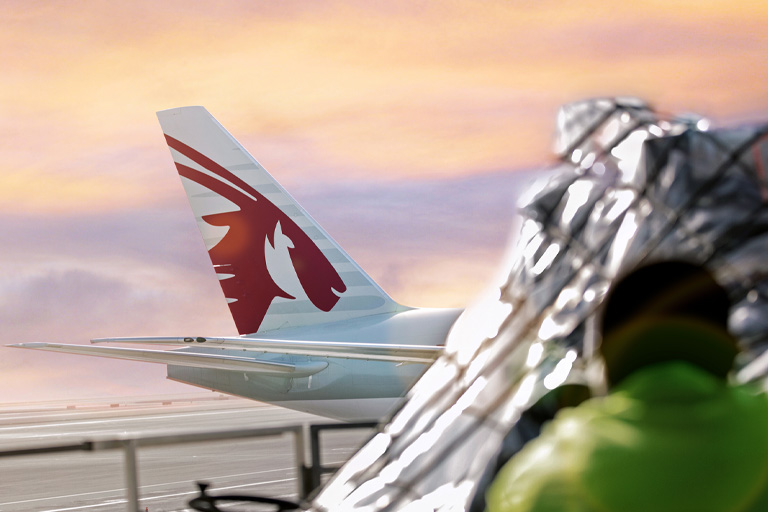
Qatar Airways Cargo is also heavily involved in the shipping of fine art around the world. One of the biggest single pieces it has moved was 229 x 33 x 20 inches (approx. 5.8m x 1m x 0.5m) – and it has shipped items of that size on three separate occasions.
One of the more unusual shipments Qatar Airways Cargo has moved was the Jeff Koons’ “Balloon Art” sculptures for Qatar Museums. The pieces were extremely sensitive to both shock and temperature, and so required meticulous handling. They arrived in oversized crates (3.99m x 1.91m x 2.82m) and were so fragile that cranes were used to transfer them directly between pallets and trucks. The sheer size of these items added considerable complexity to the operation.
The airline’s specialist team points out that moving delicate pieces is challenging because fine art is sensitive to temperature, humidity, vibration and pressure changes – any of which could cause irreversible damage. These shipments are also high-value and vulnerable to theft, requiring extensive documentation and secure handling. Many will be irregular shapes and have over-sized dimensions and will have to meet strict regulatory and Customs requirements while at the same time needing real-time visibility and secure transport.
“One of the more unusual shipments Qatar Airways Cargo has moved was the Jeff Koons’ “Balloon Art” sculptures for Qatar Museums. The pieces were extremely sensitive to both shock and temperature, and so required meticulous handling.”
Infrastructure and resources
Qatar Airways Cargo, like Michelle Art Services and Globe Creative, believes in choosing a cargo handler for a fine art shipment based on infrastructure and resources combined with experience in handling high-value items. “It’s a critical factor in ensuring the integrity and safety of fine art in transit,” says Mark Drusch, Qatar Airways Chief Officer Cargo.
The Air France KLM Martinair Cargo team concurs: “Expertise, capabilities, and resources are essential for managing high-value and sensitive cargo. We open stations for high-value shipments only after a thorough review confirms that all requirements are met. Station surveys are conducted regularly to maintain the highest level of quality and service,” adds Mirjam.
Globe Creative has been a user of Hactl and its services for more than two decades. “We’re loyal customers. We couldn’t do what we do–and safely transport the artworks and objects that we have in our exhibitions–without Hactl”, concludes Karen.